
QUILL TOWN BOOKS
Children’s Books • Learning Resources • Author Help

5 Ways to Encourage Kids to Read this Summer
5 Ways to Encourage Kids to Read This Summer
Summer break is a wonderful time for kids to relax, play, and recharge. It is also a great time to help children build a lifelong love of reading. Many parents and grandparents struggle to make books feel exciting when screens, busy schedules, and outdoor fun compete for attention.
The good news is that reading does not have to feel like homework. Small changes and simple routines can make books a natural and enjoyable part of summer days. Here are five simple ways you can encourage kids to read this summer without turning reading into a battle.

1. Let Kids Choose Their Own Books
One of the fastest ways to discourage reading is to force children to read books they aren't interested in. Kids are much more likely to read when they get to choose stories that match their interests.
Some children love dinosaurs, trucks, animals, jokes, mysteries, or graphic novels. Others enjoy silly stories, bedtime books, or books about friendship and kindness. The goal is not to pick the “perfect” educational book. The goal is to help children connect reading with enjoyment.
Try taking kids to:
The local library
A bookstore
Little Free Libraries
Yard sales with children’s books
Summer reading events
Even rereading favorite books counts. Repetition helps build confidence and reading skills.
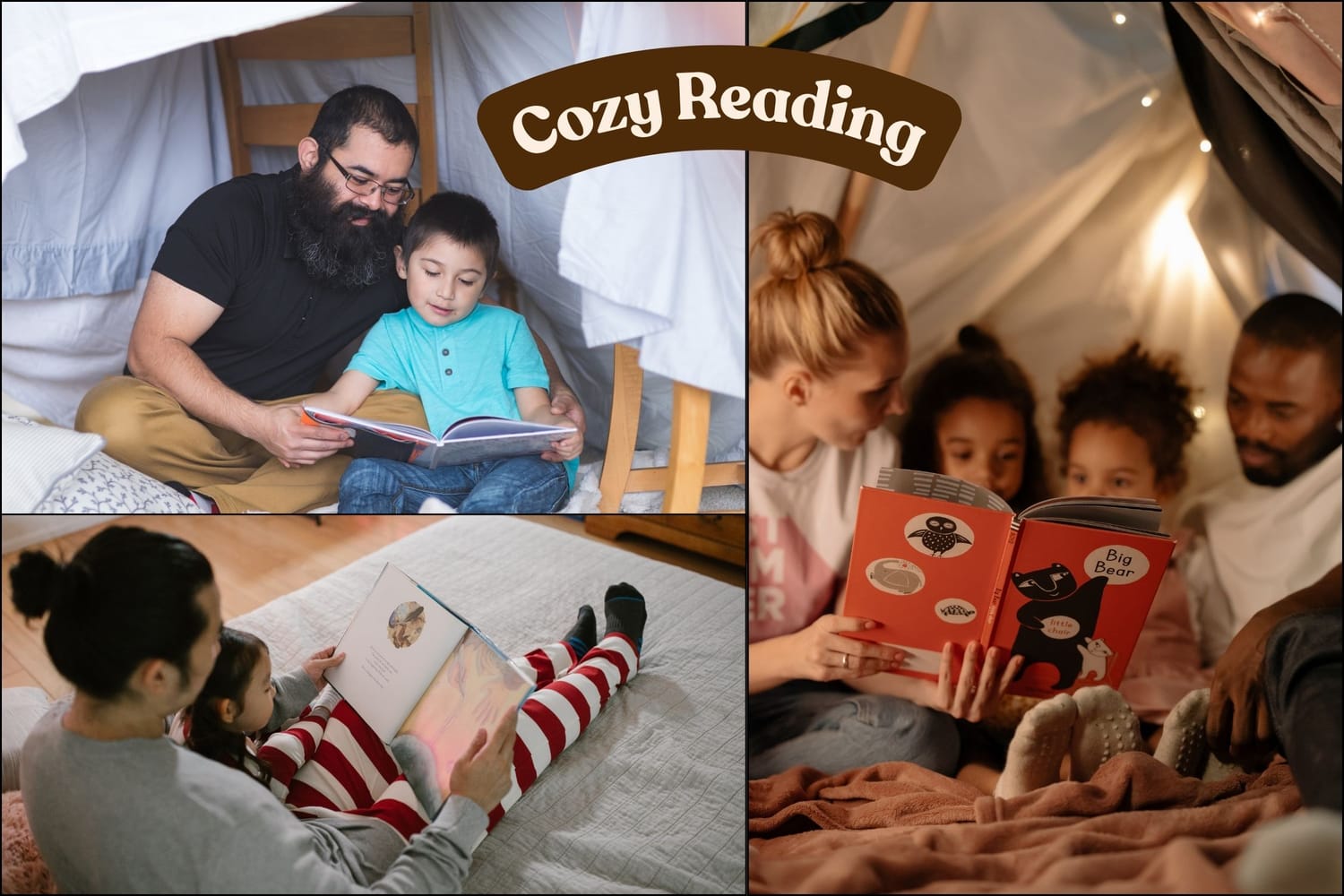
2. Create a Cozy Summer Reading Routine
Children thrive on routines, even during summer break. Setting aside regular reading time helps make books part of the day, not an occasional activity.
Reading time does not have to be long. Even 15 to 20 minutes a day can make a difference.
Some easy ideas include:
Reading before bedtime
Morning reading with breakfast
Quiet reading after outdoor play
Reading during rainy afternoons
Family reading time where everyone reads together
You can also make reading feel extra special with:
Blankets and pillows
Flashlights for “campfire reading.”
Popsicles during reading time
A small reading nook
Kids remember the feeling connected to reading just as much as the books themselves.
3. Make Reading Interactive and Fun
Reading doesn't always mean sitting quietly with a book. Bringing stories to life helps many children stay engaged.
Try activities like:
Acting out scenes from books
Using silly voices for characters
Drawing favorite characters
Making crafts related to stories
Creating scavenger hunts based on books
Cooking a snack mentioned in a story
Visiting places connected to books, like zoos or parks
You can also ask simple questions while reading:
“What do you think happens next?”
“Which character would you be?”
“What was the funniest part?”
Conversations help children connect emotionally to stories and improve comprehension skills.
4. Be a Reading Role Model
Kids notice what adults do. If they regularly see parents or grandparents reading, they are more likely to view reading as something valuable and enjoyable.
This does not mean you need to sit with a novel every day.
Even reading:
Magazines
Cookbooks
Gardening books
Newspapers
Devotionals
DIY books
shows children that reading is part of everyday life.
Talk about what you are reading in simple ways:
“This recipe looks delicious.”
“I learned something interesting today.”
“This story made me laugh.”
Children often imitate what they see more than what they are told.
5. Celebrate Reading Progress Instead of Perfection
Not every child becomes an enthusiastic reader overnight, and that is okay. The goal is to build positive experiences around books.
Celebrate small wins like:
Finishing a book
Reading independently
Trying a new genre
Reading aloud confidently
Visiting the library
Simple rewards can help motivate younger children:
Sticker charts
Extra bedtime story choices
A special outing after finishing books
Printable reading logs
Praise and encouragement
Avoid pressuring children to read perfectly. Confidence grows when children feel supported, not criticized.
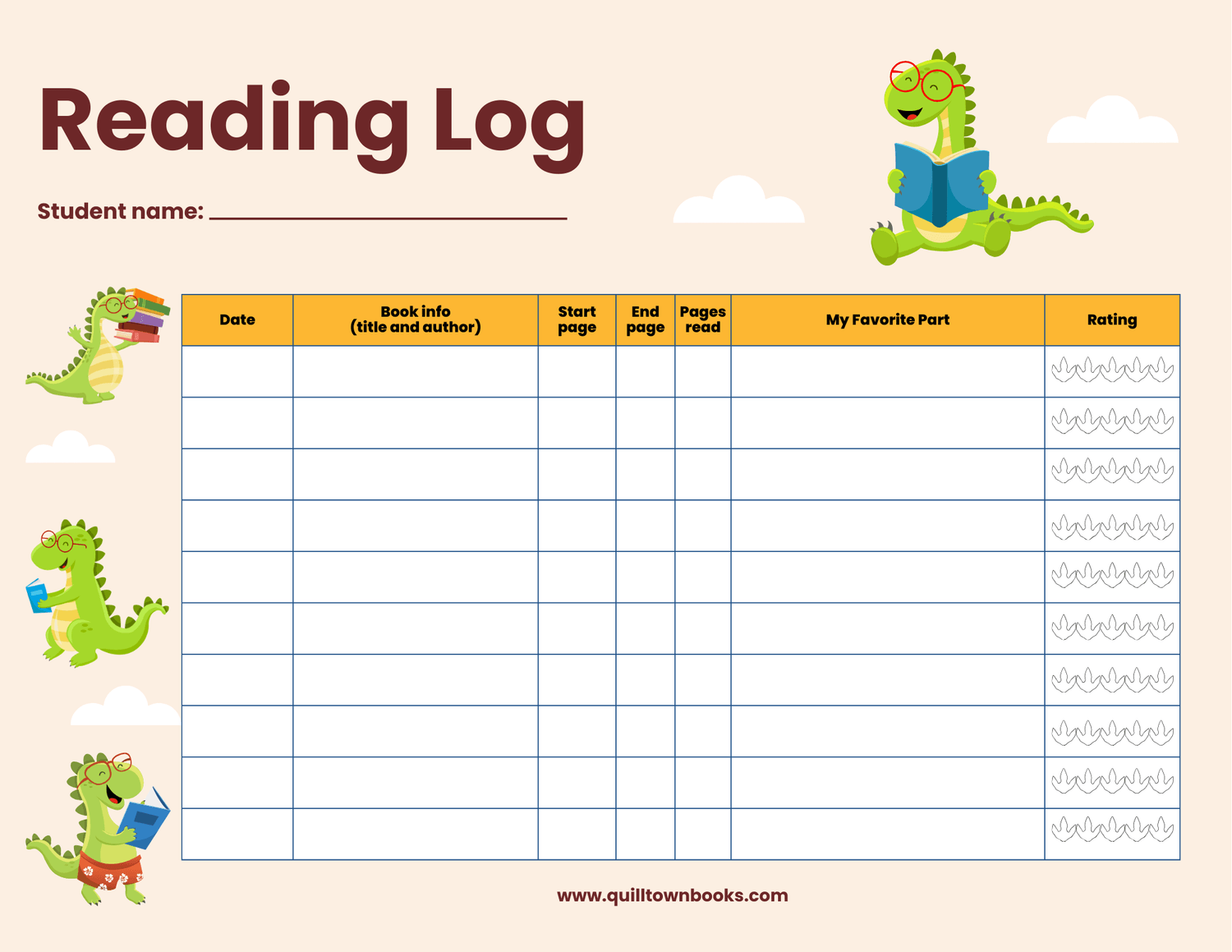
Free Dinosaur Reading Log to inspire a love of reading.
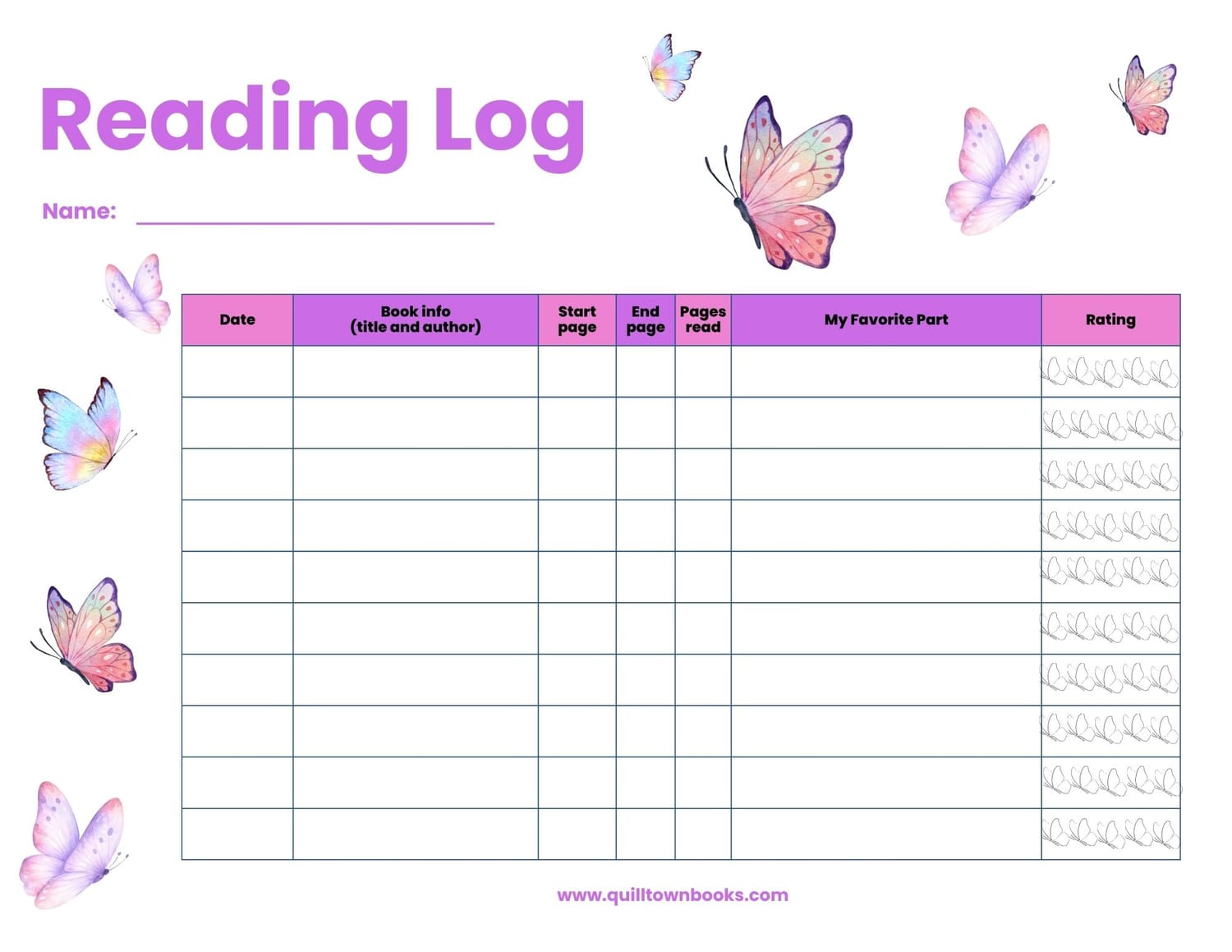
Free Butterfly Reading Log to inspire a love of reading.
Looking for just the right book to read this summer? Here is a list of 13 amazing books from independently published authors. Ultimate 2025 Summer Reading Guide from 13 Indie Authors; kids will love
Final Thoughts
Summer reading does not need to be complicated. A few books, a little creativity, and positive encouragement can help children build reading habits that last far beyond summer vacation.
Books open the door to imagination, empathy, learning, and connection. Whether you are a parent, grandparent, caregiver, or educator, your encouragement matters more than you may realize.
Sometimes the smallest moments, such as reading together on the couch, laughing at a silly story, or letting a child turn the pages independently, are the moments that help create lifelong readers.
Looking for more learning activities for children? Visit the Quill Town Books Free Printables page and discover the fun of learning.
References
American Academy of Pediatrics. (2024). Reading aloud with young children. Retrieved from American Academy of Pediatrics
National Summer Learning Association. (2024). Summer learning and literacy resources for families. Retrieved from the National Summer Learning Association
Reading Rockets. (2024). Summer reading tips for parents. Retrieved from Reading Rockets



I may earn a small commission from affiliate links at no extra cost to you.
Your support helps me bring more free resources to parents, educators, and authors.